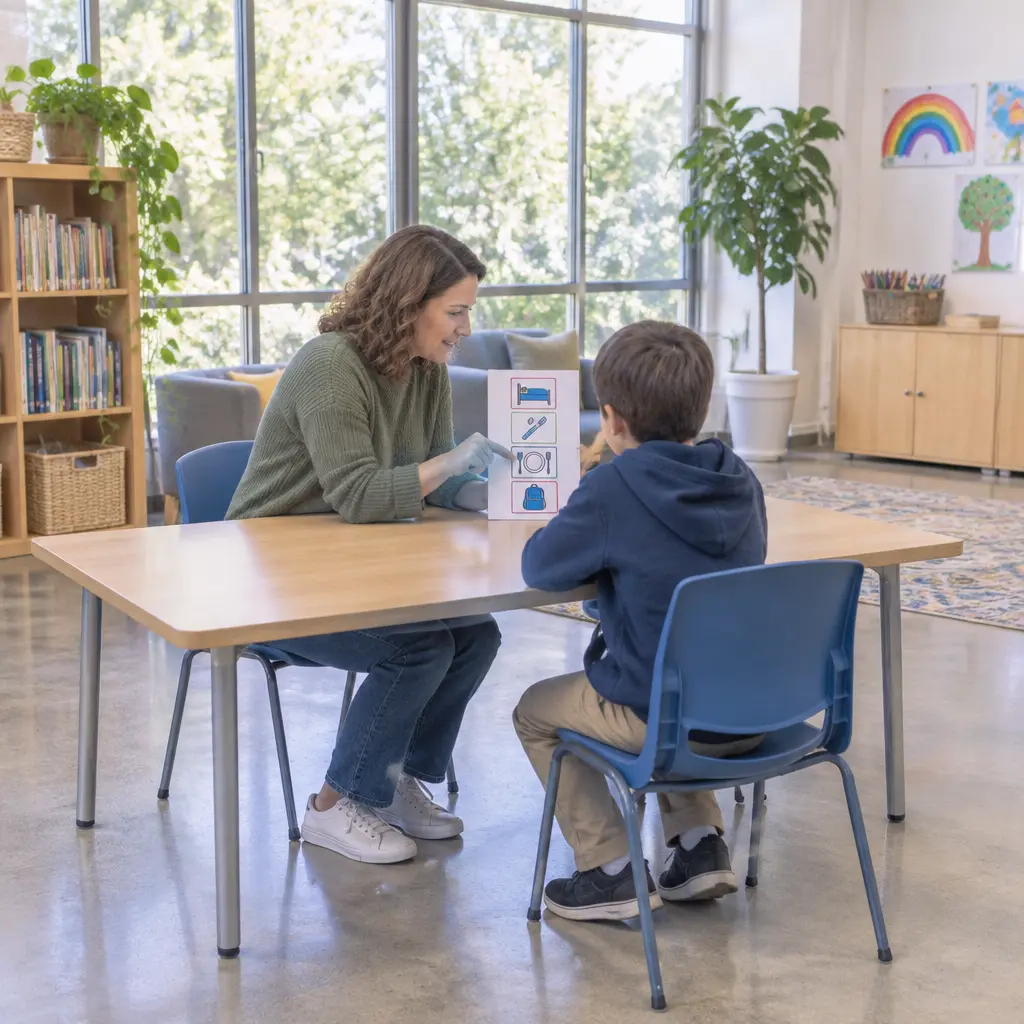
Trauma-Informed Parenting Recognizing Behavioral Cues As Survival Responses Not Defiance Trauma-Informed Parenting Recognizing Behavioral Cues As Survival Responses Not Defiance

Trauma-informed parenting starts with a useful shift in perspective: a child’s behavior may be a survival response shaped by stress or past adversity, rather than deliberate defiance. Trauma can affect [...]


Open Adoption Boundaries Negotiating Contact Levels That Respect All Parties’ Needs Open Adoption Boundaries Negotiating Contact Levels That Respect All Parties’ Needs

Open adoption boundaries are the mutually understood limits that shape communication and contact among an adopted person, their adoptive family, and members of their family of origin. There is no [...]

Transracial Adoption Competency Developing Cultural Humility Through Ongoing Education Transracial Adoption Competency Developing Cultural Humility Through Ongoing Education

Transracial adoption competency is the knowledge, reflective practice, and relationship-building skill needed to support an adopted person and family across racial and cultural differences. Developing it requires ongoing education—not a [...]

Post-Placement Adjustment Navigating Attachment Phases Beyond Initial Honeymoon Periods Post-Placement Adjustment Navigating Attachment Phases Beyond Initial Honeymoon Periods

Post-placement adjustment is the evolving process through which a child and caregiver build safety, trust, and a durable relationship after an adoption or foster-care placement. The early “honeymoon” period may [...]

Home Study Preparation Framing Evaluation As Safety Verification Not Character Judgment Home Study Preparation Framing Evaluation As Safety Verification Not Character Judgment

Home-study preparation evaluation is a structured review of whether a family’s home environment and caregiving arrangements can safely support a child’s needs. Framed as safety verification—not a character judgment—it focuses [...]